
Homegrown Butternut Squash
In this article
Try my butternut squash recipes! Butternut is a winter squash: it grows all summer, ripens in fall and, once cured, keeps for weeks without canning or freezing.
At a glance
- Plant: after all danger of frost has passed and the soil has warmed.
- Sun: full sun, at least 6 hours a day (8 to 10 is better).
- Space: 3 to 4 feet between plants, in rows about 6 to 8 feet apart.
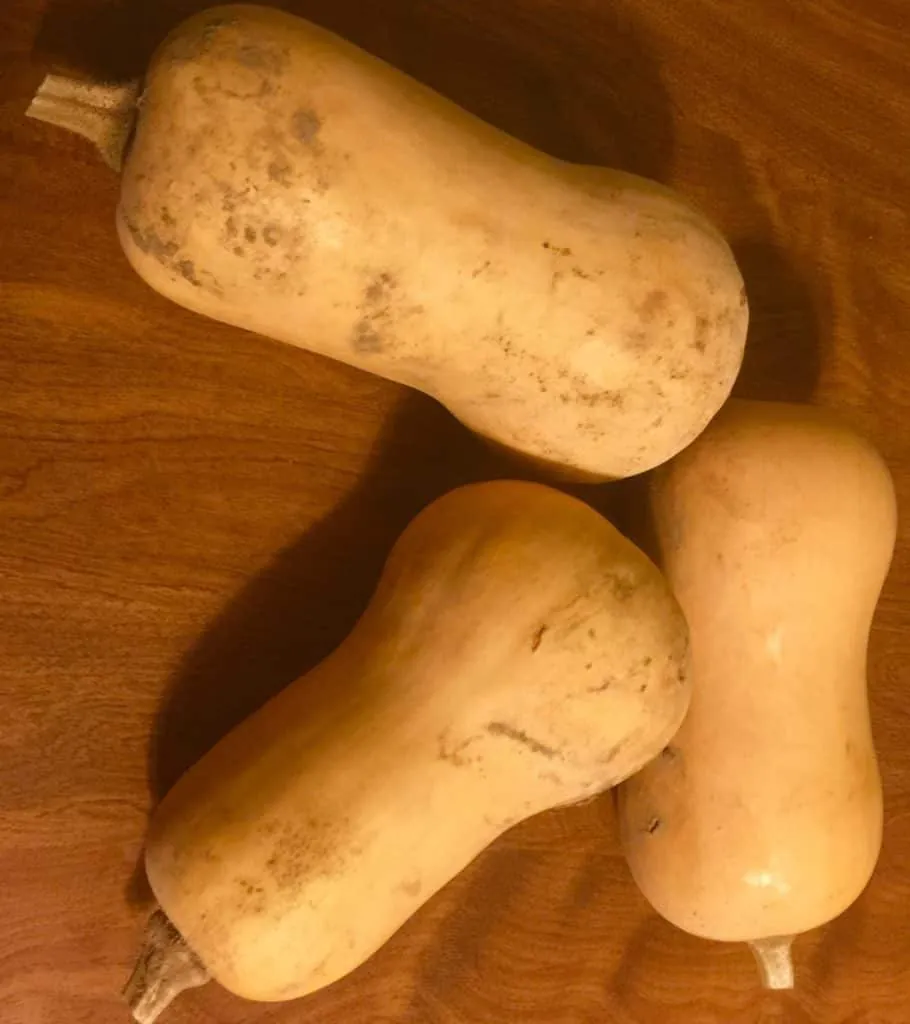
- Ripe when: the rind is hard and uniformly tan.
- Keeps: about 2 to 3 months after curing.
Why grow butternut squash
Butternut squash is one of the easiest ways to keep eating from the garden after the season ends. A cured squash sits happily on a cool shelf, ready for soup or stew whenever you want it.
It is also a forgiving cook. The sweet, dense flesh works in soups, curries and stews, and a single squash goes a long way.
When and where to plant
Squash is tender to frost, so wait until all danger of frost has passed and the soil has warmed up. Give it a spot in full sun, with at least 6 hours of direct light a day and ideally 8 to 10.
Winter squash has a medium to high need for nutrients. Mix compost into the bed before planting. Most winter squash take 60 to 100 days to mature, so check the days to maturity on your seed packet and count back from your first fall frost.
How to plant butternut squash
Butternut vines sprawl, so give them plenty of room. University of Maryland Extension suggests planting seeds 3 to 4 feet apart in rows about 6 to 8 feet apart. If space is tight, plant along the edge of the garden and let the vines run out onto the lawn or path.
Care: water and pests
Water deeply and regularly at the base of each plant, especially in hot, dry weather and once the first fruits start to form.
Three pests cause most squash trouble: squash vine borer, squash bugs and cucumber beetles. Walk your squash patch often and look under the leaves and along the stems at the base of the plant. Squash also depends on bees to carry pollen from the male flowers to the female flowers, so a garden that welcomes pollinators helps the fruit set.
Harvesting
Leave the squash on the vine until it is fully mature. A ripe butternut has a hard rind you cannot puncture with your thumbnail and an even tan color. Harvest usually comes in September or October, before a heavy frost.
Cut the fruit from the vine with a sharp knife or pruning shears, leaving 1 to 2 inches of stem. Handle the squash gently: cuts and bruises let in the organisms that cause rot.
Curing and storing
Curing toughens the skin and heals small scratches, which helps the squash keep. Iowa State University Extension recommends curing butternut squash for 10 to 14 days at 80 to 85°F and 80 to 85% relative humidity.
After curing, store the squash in a cool, dry, well-ventilated place at 50 to 55°F. Set them in a single layer, not touching, and keep them away from apples, pears and other ripening fruit, whose ethylene gas shortens storage life. Properly cured butternut keeps about 2 to 3 months. For more on storing the harvest, see cold room storage for fruit and vegetables.
Recipes with homegrown butternut squash
- Garden Fresh Curried Butternut Squash Soup
- Vegan African Peanut Stew
- All recipes with butternut squash
Butternut squash questions
How do I know when butternut squash is ripe?
A ripe butternut has a hard rind you cannot puncture with your thumbnail, and its skin is uniformly tan. Harvest before a heavy frost.
Do I need to cure butternut squash?
Curing helps it keep. Iowa State University Extension recommends 10 to 14 days at 80 to 85°F with 80 to 85% relative humidity, which hardens the skin and heals small cuts and scratches.
How long does butternut squash keep?
Properly cured and stored at 50 to 55°F in a dry, well-ventilated spot, butternut squash keeps about 2 to 3 months.
Annie